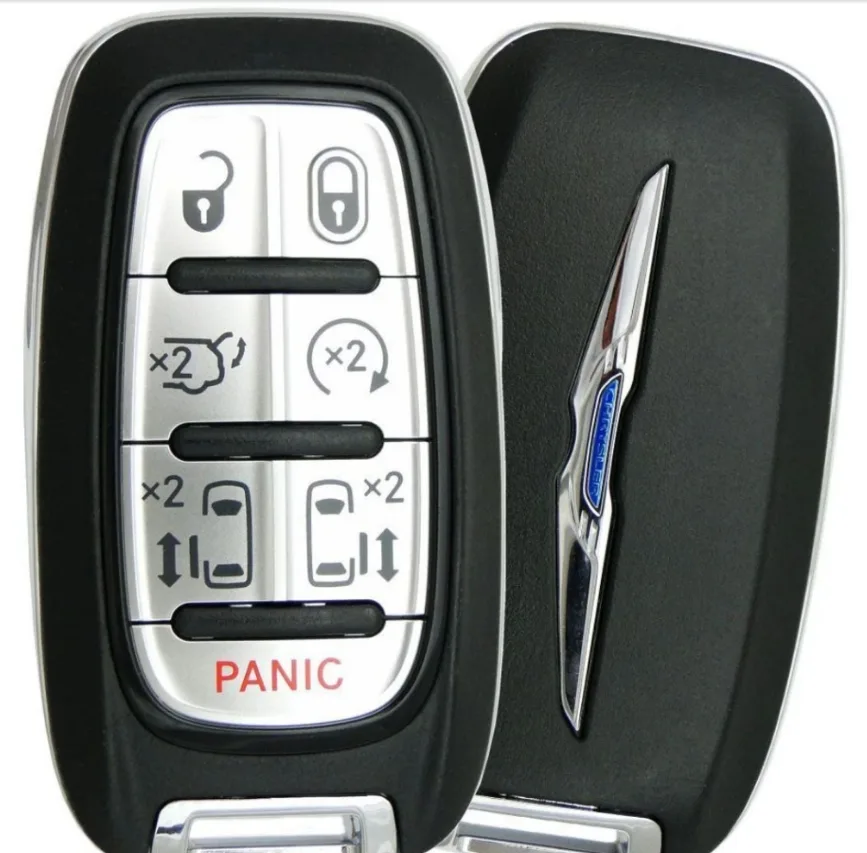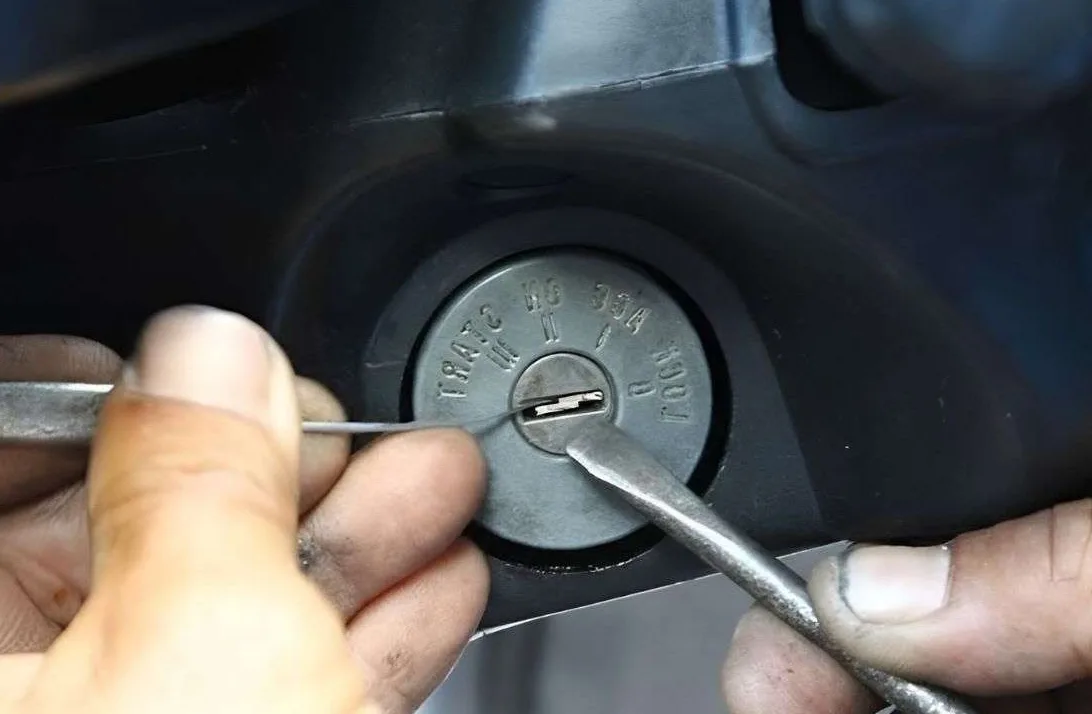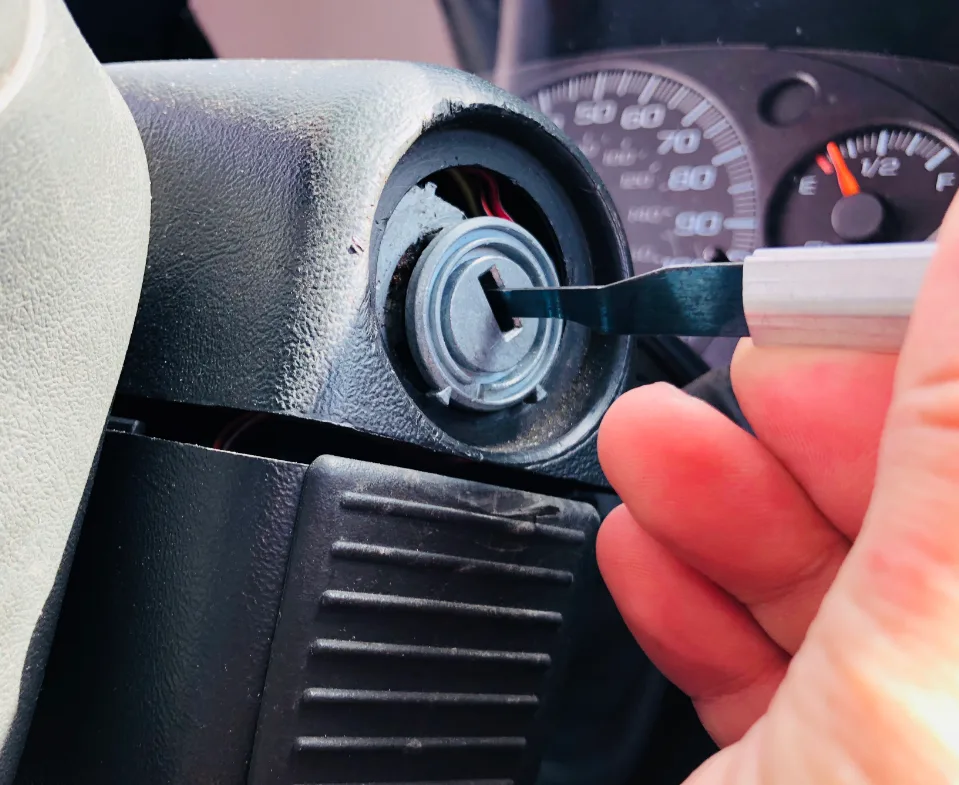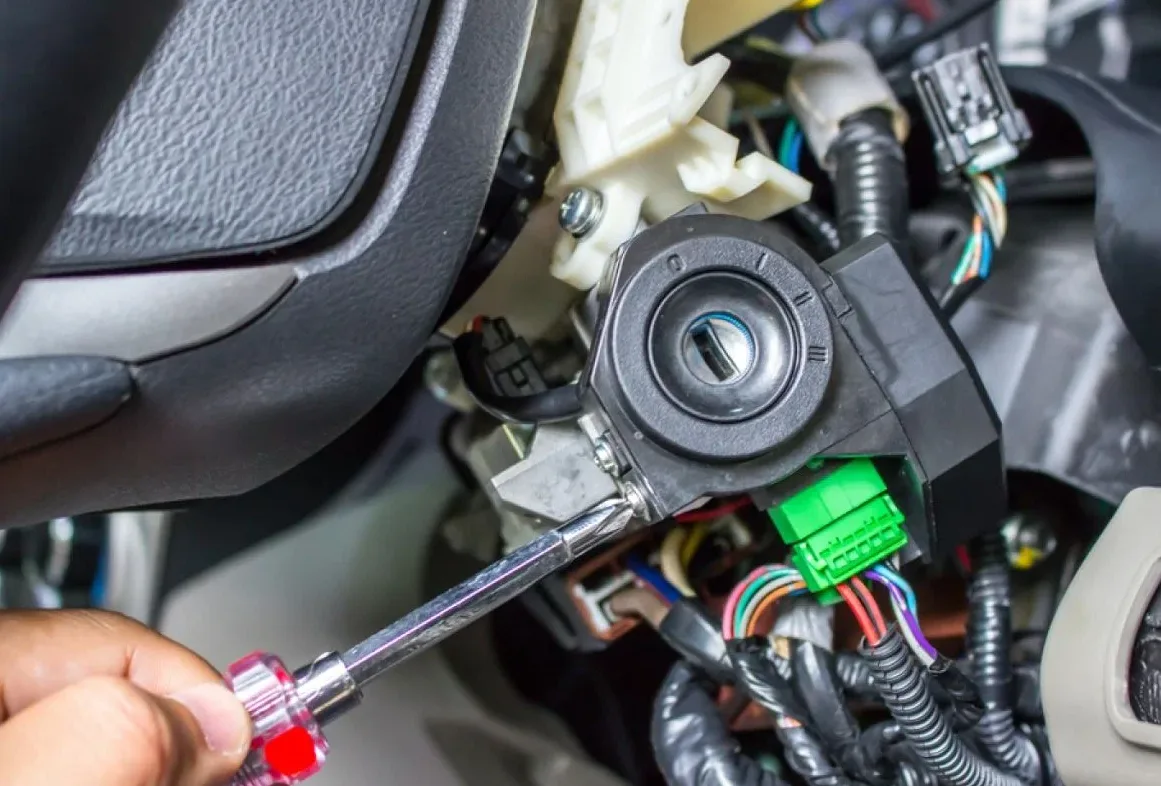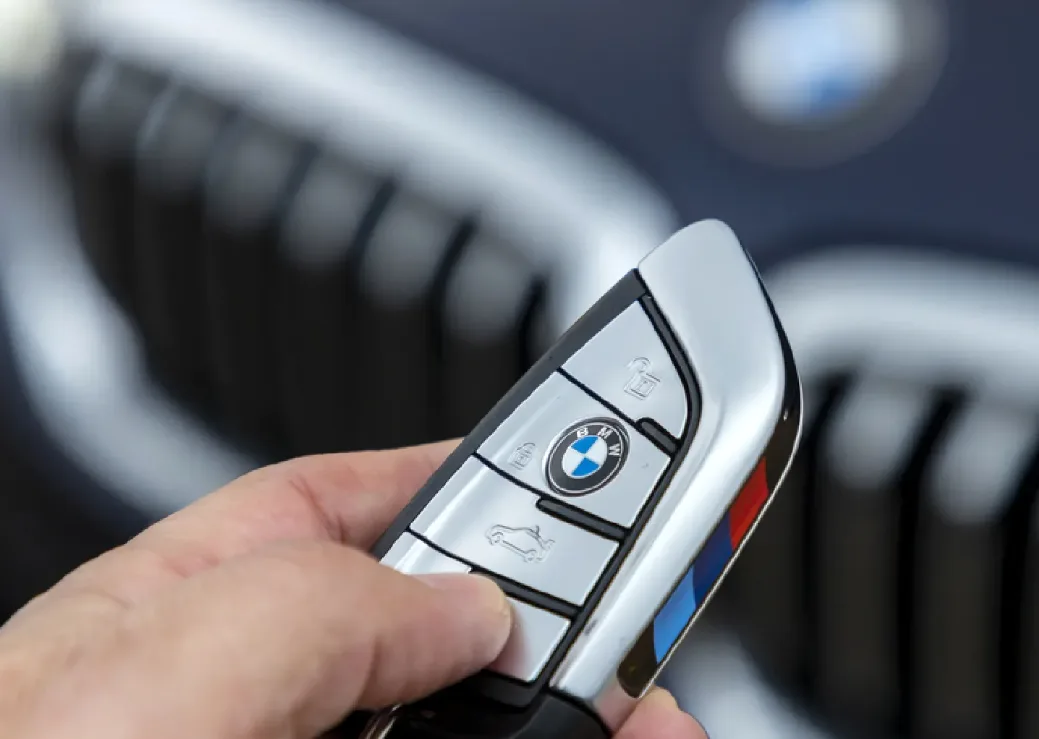
Adding a key chip to your immobilizer. Cloning an existing transponder. Erasing a lost chip. We program chips for most makes since 1996 - PCF7935, ID46, ID48, Megamos AES, Hitag2, and the newer Hitag AES platforms.
Transponder programming in PSL - chip pairing to the vehicle's immobilizer ECU. Most domestic and Japanese vehicles 1996+ doable on-site.
Cost: $60-140 for programming only (you already have the chip/key). $160-380 for cut blank + program. All-keys-lost scenarios $200-450.
Chip platforms covered: Philips PCF7935 / PCF7936 / PCF7945 / ID46 / ID48 / Megamos AES, Texas Instruments DST40 / DST80 / DST AES, Hitag2 / Hitag AES.
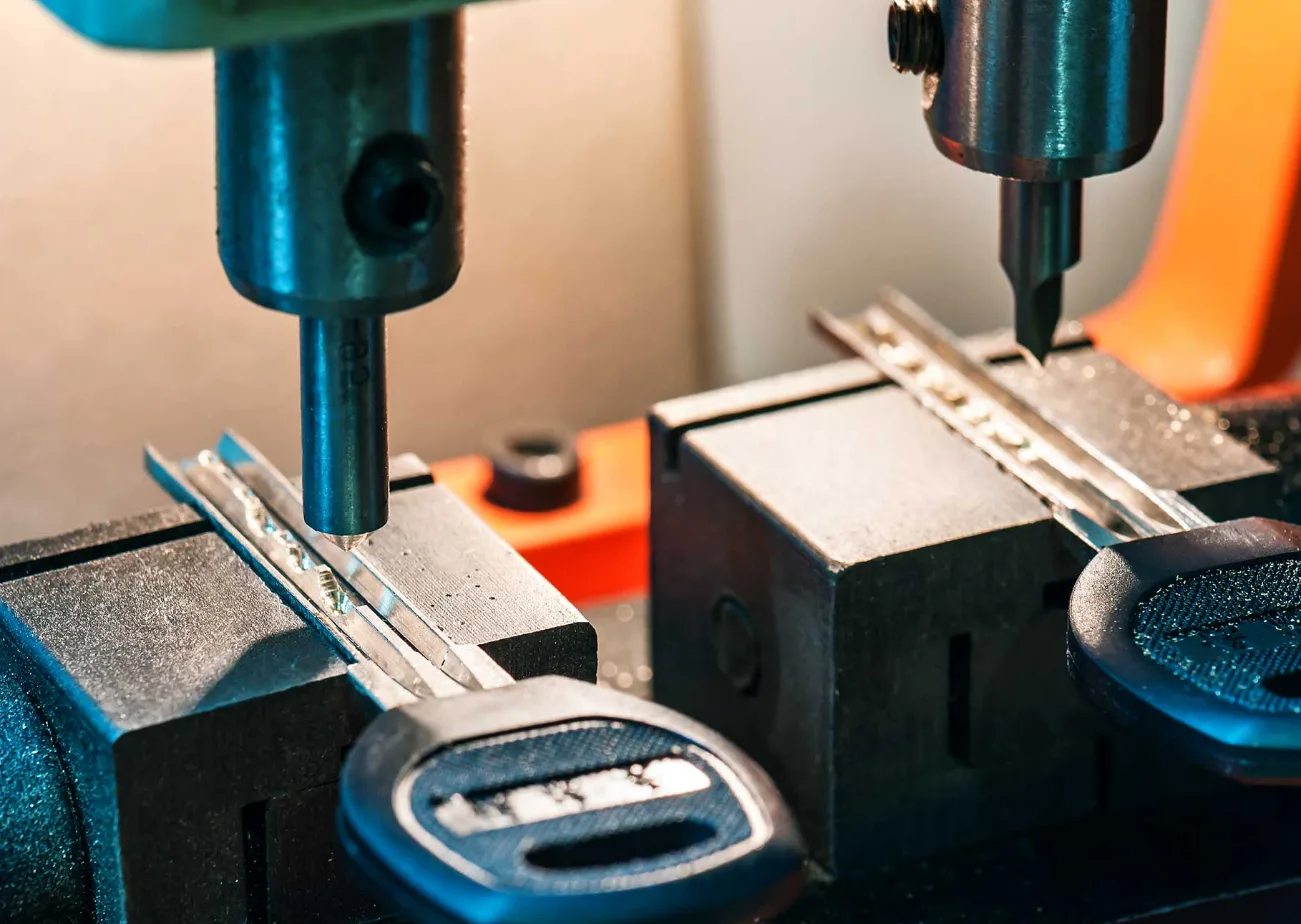
Big-box hardware stores can cut the metal blade for $4 and it'll turn the lock cylinder fine. What they can't do is talk to the chip embedded in the key bow. Without the right PCF7935, PCF7936, ID46, ID48, or Megamos AES transponder paired to your car's immobilizer, the engine will crank for two seconds and shut down. That's by design - it's the anti-theft system working.
We come out with the EEPROM cloner and OBD2 programmer, identify the exact chip your vehicle expects, program it to talk to the immobilizer, and the engine starts. Most transponder programming in PSL runs $160-290 including the chip. We come to Torino, Southbend, Prima Vista, Clover Park and anywhere the car is currently sitting.
The hardware-store key is half the job. Call (772) 284-5142 for the half that actually starts the engine.
PCF7935, PCF7936, ID46, ID48, Megamos AES - we identify the correct family from your year/make/model and stock the common ones.
Some jobs clone the existing chip onto a fresh blank. Some need fresh pairing via the OBD2 port. We carry tools for both paths.
Including the chip and the cut blade. No hidden chip-cost line item appearing after the fact.
Cloning is faster (15-25 min) than fresh-pairing AKL jobs (40-60 min). We tell you which path applies on the call.
Bad programmers can brick the ECU. Our tooling is mainstream automotive industry kit, not a $40 Aliexpress dongle.
Second key while the programmer is hooked up is about half the cost of a future call-out. Worth doing now.
Transponder work is where the cheap-key trap lives. The hardware store will sell you a $4 blade that turns the lock but doesn't talk to the chip. The pop-a-lock contractor that shows up subbed by a national dispatch board may not have the programmer with them at all.
We don't bait-and-switch. The VIN tells us which chip family your car expects, and that determines the quote on the phone.
Industry-standard kit (not a $40 OBD2 dongle from Amazon) that handles VAG, Ford EEC, GM Class 2, Hyundai/Kia, Toyota DST, Honda HPCD.
Dealers order the chip from the regional warehouse. That's a 2-4 day wait. We have PCF7936 and ID46 sitting in a drawer in the van.
River Park, Magnolia Lakes, St Lucie West - the van rolls and the chip programs at the curb. No appointment two weeks out.
A transponder is a small chip embedded in the head of your car key (or the body of a smart key). When you turn the ignition (or press the start button), an antenna ring around the cylinder reads the chip. The chip sends a unique code; if it matches what the vehicle's immobilizer ECU expects, the engine starts. If it doesn't match, the immobilizer cuts fuel/spark and the car won't crank.
Cars without transponders (pre-1996 mostly) start with any cut key that fits the cylinder. The transponder is what makes a 'thrown-together' key from the hardware store fail to start your vehicle - that's the security feature.
Programming a transponder is the process of telling the vehicle's immobilizer 'this new chip is authorized.' Done via the OBD-II port on the vehicle (usually under the dash) with diagnostic tools that have manufacturer-licensed access codes.
Honda / Acura (1998-2015): Texas Instruments DST40 (older), DST80 (mid-2000s). Migrated to Megamos AES on newer Honda after 2018.
Toyota / Lexus (1998-2015): Texas Instruments DST40. 2016+ switched to DST AES on most platforms.
Ford / Lincoln (1996-current): Philips ID40 / ID46 / ID48 on most vehicles. Newer Ford PATS uses 80-bit and 128-bit cipher.
GM / Chevy / Chevrolet / Cadillac (1997-current): Initially Texas Instruments TIS, migrated to ID46 / Megamos AES for newer models.
Chrysler / Dodge / RAM / Jeep (1998-current): Philips ID46 (SKIM system), newer FCA platforms use Megamos AES.
Hyundai / Kia (2002-current): Philips ID46 / ID47 / ID48.
Nissan / Infiniti (1999-current): Philips ID46 / Megamos AES.
BMW (1998-current): Philips ID33 / ID46 / Megamos AES. CAS3+ and FEM platforms harder than older models.
Mercedes-Benz (1996-current): Megamos AES on EZS / FBS3/4 systems. Some dealer-only.
VW / Audi (2002-current): Various - ID46 / ID48 / Megamos AES. MQB platform (2015+) more challenging.
| Service | Typical Price | Notes |
|---|---|---|
| Add transponder to existing key | $80 - $180 | When the key has a chip cavity but no chip yet. |
| Clone existing transponder | $60 - $120 | Duplicate the chip to a new key. |
| Program new chip (basic transponder) | $160 - $290 | Cut blank + program. |
| All-keys-lost programming (most makes) | $280 - $450 | When no working key exists. |
| Smart key / push-to-start chip pair | $280 - $500 | Plus fob shell. |
| Megamos AES / newer platforms | $220 - $580 | Higher security chips. |
| Erase lost-chip from immobilizer | $80 - $160 | Lock out old keys after replacement. |
| Decision | Mobile locksmith (us) | Dealer | DIY |
|---|---|---|---|
| Programs at your location | Yes | No | Yes IF you have $500-2000 in tools |
| Handles all-keys-lost scenario | Yes (most makes) | Yes | No - usually impossible |
| Time to working key | 30-90 min | 3-7 days | Maybe |
| Cost to add chip to existing key | $80-180 | $140-280 | Tool cost + your time |
| Cost for all-keys-lost program | $280-450 | $425-680 | Effectively impossible |
Real person on the phone in under 2 rings. Locksmith on-site in 15-30 minutes. Honest price before any tools come out.
Call (772) 284-51425-30 minutes for most mainstream vehicles. Honda, Toyota, Ford, GM, Chrysler, Hyundai, Kia are usually under 20 minutes. Luxury European (BMW, Mercedes) can take 60-120 minutes. All-keys-lost scenarios add 20-40 minutes because the immobilizer ECU has to be reset.
Most makes 1996-2024 yes. Exceptions where dealer programming is required: newer BMW (post-2019 on some platforms), some VW/Audi MQB security (2018+), Mercedes EZS on certain models, Ford 2022+ Sync 4. We tell you on the phone whether your specific year/make is dealer-only.
A transponder is the security chip itself - a small RFID chip embedded in any modern car key. A smart key (also called proximity key or push-to-start fob) is a complete keyless device that uses the same transponder technology plus additional sensors so the vehicle detects it inside the cabin without you inserting it anywhere. All smart keys have transponders; not all transponder keys are smart keys.
For some chip platforms yes - older Philips ID33 / ID46, Texas Instruments DST40 chips can be cloned directly to a blank chip. Newer encrypted platforms (Megamos AES, DST80, Hitag AES) cannot be cloned - they have to be programmed fresh to the vehicle's immobilizer. We tell you on the phone which path applies to your vehicle.
By default no - adding a new key to the immobilizer doesn't disable existing keys. If you want existing keys disabled (lost-key scenario), we do an 'all-keys-lost' procedure that erases everything and pairs only the new key. Costs $40-80 extra and locks out anyone with the old key.
Yes - push-to-start vehicles still use a transponder chip in the fob. The chip transmits to a cabin antenna that authenticates the fob, and the immobilizer ECU compares it to authorized keys. Programming follows the same OBD-II procedure as traditional transponder keys.
Transponder programming visits cover all of PSL - driveways, parking lots, dealership service drives. Common locations: Tradition (newer vehicles needing all-keys-lost), Bayshore + Sandpiper Bay (older domestic trucks getting cylinder repair + reprogram), Magnolia Lakes (multi-vehicle households getting all keys reset).
Last updated: 2026-05-18